

One mistake I made when I first started learning about agriculture was assuming that any crop would automatically make money as long as it grew well. I used to think farming was simply about planting what everyone else was planting and waiting for harvest. Later, I realized something important: growing crops and making profit are not always the same thing.
I remember speaking with a farmer who planted a large amount of tomatoes because prices were high the previous season. He expected huge profits. Unfortunately, many farmers had the same idea, and by harvest time, the market became flooded with tomatoes. Prices dropped heavily, and he struggled to recover his costs.
That was when I understood that smart farming is not just about asking, “What can grow this season?” The better question is, “What does the market actually need this season?”
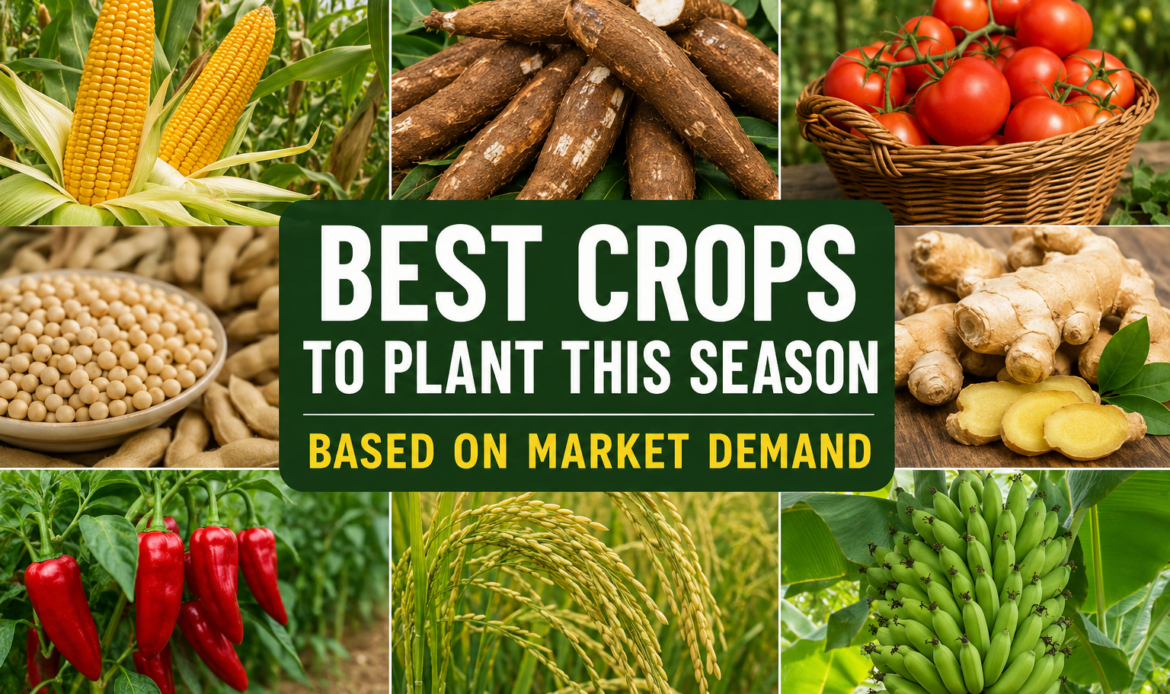
If you want better returns, you need to pay attention to demand, supply, processing opportunities, consumer behavior, and seasonal trends. Some crops consistently perform well because they are consumed daily, while others make more money because they become scarce during certain periods. Recent agricultural market analyses continue to highlight crops like maize, cassava, rice, tomatoes, soybeans, and ginger as strong demand areas in Nigeria because of household consumption, processing industries, feed production, and export potential.
Maize Remains One of the Safest Crops to Plant
Maize is one crop I keep seeing in almost every serious farming discussion, and for good reason.
The first thing many people think about is food consumption, but maize goes far beyond that. It is used in poultry feed production, pap production, flour processing, breweries, and industrial processing.
That means even when household demand changes, industries continue buying.
One thing that makes maize attractive is its relatively short maturity period. Depending on the variety, some mature within about three to four months. Farmers also like maize because mechanized farming can be used easily on larger farms.
Demand remains strong because feed mills, food processors, and households all depend heavily on it.
Cassava Continues to Be a Reliable Income Crop
If someone asked me to choose one crop that quietly keeps making money year after year, cassava would probably be among the top options.
Cassava has one major advantage: multiple income streams.
It can be processed into:
- Garri
- Fufu
- Starch
- Animal feed
- Industrial ethanol
- Flour
This is important because you are not depending on a single buyer.
I also like the fact that cassava grows in many parts of Nigeria and generally requires less attention compared to some delicate crops.
Many commercial farmers continue investing heavily in cassava because demand exists at both household and industrial levels.
Tomatoes Can Generate Fast Returns
Tomatoes can be extremely profitable, but they can also frustrate farmers who go in without planning.
I once met a farmer who explained that his biggest lesson was learning timing. He discovered that planting tomatoes at the same time everyone else planted often reduced profits because market supply increased.
Tomatoes move quickly in the market because they are used daily in homes, restaurants, and food businesses.
The challenge is that tomatoes are sensitive to:
- Pests
- Diseases
- Weather changes
- Transportation problems
Still, when managed properly, tomatoes can provide fast returns and strong market demand. Nigeria’s tomato demand remains larger than local supply in many periods, especially during off-season production.
Rice Remains a Strong Long-Term Opportunity
Rice is one of the most consumed foods in Nigeria.
Almost every household buys rice regularly, and local production continues receiving attention because demand remains extremely high.
Many farmers consider rice attractive because of:
- Large consumer demand
- Government support initiatives
- Commercial processing opportunities
- Stable market demand
Rice farming requires more planning, especially regarding water and land conditions, but demand remains consistently strong.
Soybeans Are Becoming Increasingly Attractive
Soybeans are often overlooked by beginners.
I used to hear more discussions around maize and cassava while soybean farming received less attention. Then I started noticing how many industries actually use soybeans.
Demand comes from:
- Food processing companies
- Animal feed producers
- Soy milk manufacturers
- Oil processors
Export buyers
One thing commercial farmers like is the possibility of securing contracts before harvest.
Ginger Has Strong Export Potential
Ginger may not be the first crop that comes to mind for many people, but it has become increasingly valuable because of local and international demand.
It is used in:
- Food production
- Drinks
- Medicine
- Spices
Export markets
Nigeria is already among major global producers of ginger, making it attractive for farmers interested in export opportunities.
Pepper Can Be Highly Profitable
Pepper demand rarely disappears.
Whether in homes, restaurants, or food processing businesses, people buy pepper regularly.
One thing I noticed is that farmers who grow pepper successfully often pay close attention to timing and irrigation.
Pepper can become particularly profitable during periods when supply drops and prices rise.
Plantain Provides Continuous Income
Unlike crops that are harvested once and cleared, plantain has a different advantage.
After planting, new suckers continue developing.
This creates a more continuous production cycle and can provide steady income over time.
Demand comes from:
- Homes
- Restaurants
- Roadside food businesses
- Plantain chip producers
Because of its wide use, many farmers consider plantain an evergreen crop.
How to Decide What to Plant This Season
After learning from different farmers and watching market patterns, I realized that choosing crops should involve more than excitement.
Ask yourself:
- Do people buy this crop regularly?
- Can industries use it?
- How quickly does it mature?
- Can I easily find buyers?
- What happens if market prices drop?
- Can I process it into other products?
Many people focus only on expected profit and ignore market access.
A profitable crop without buyers becomes a problem.
Final Thoughts
The best crop to plant this season is not necessarily the one everyone is talking about. It is the one that matches market demand, your available resources, and your ability to manage it properly.
The biggest lesson I learned is that successful farmers do not simply grow crops; they study markets.
Growing what the market wants instead of growing what everyone else is growing can make the difference between a stressful season and a profitable one.